Enterprise VR Training & Industrial Metaverse: 2025 Innovation Matrix
Complete guide to launching and scaling enterprise VR training and industrial metaverse programs with proven ROI. Analysis of 35+ vendors across platforms, hardware, and content studios.


Executive Summary
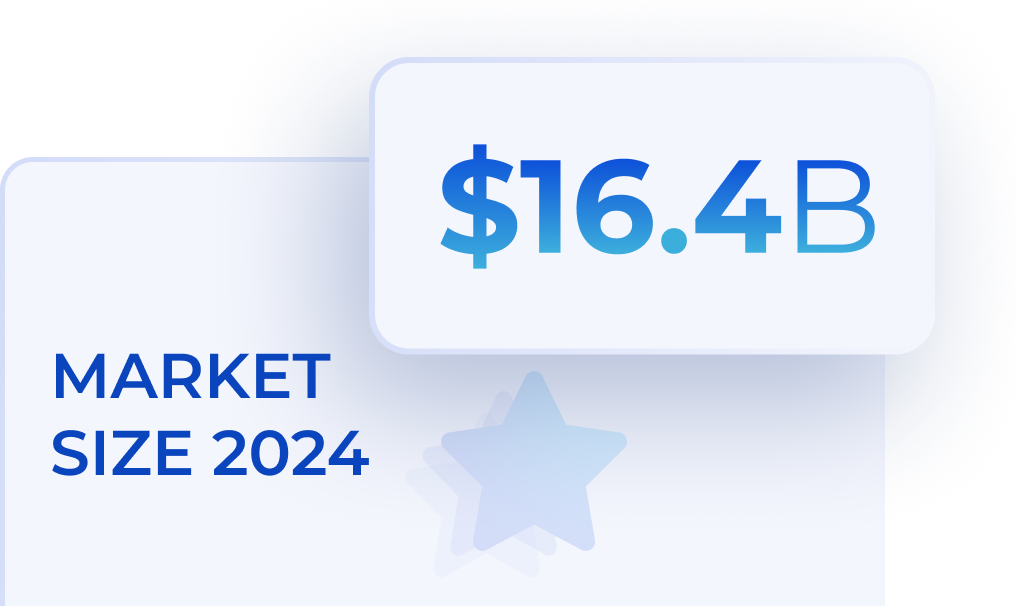
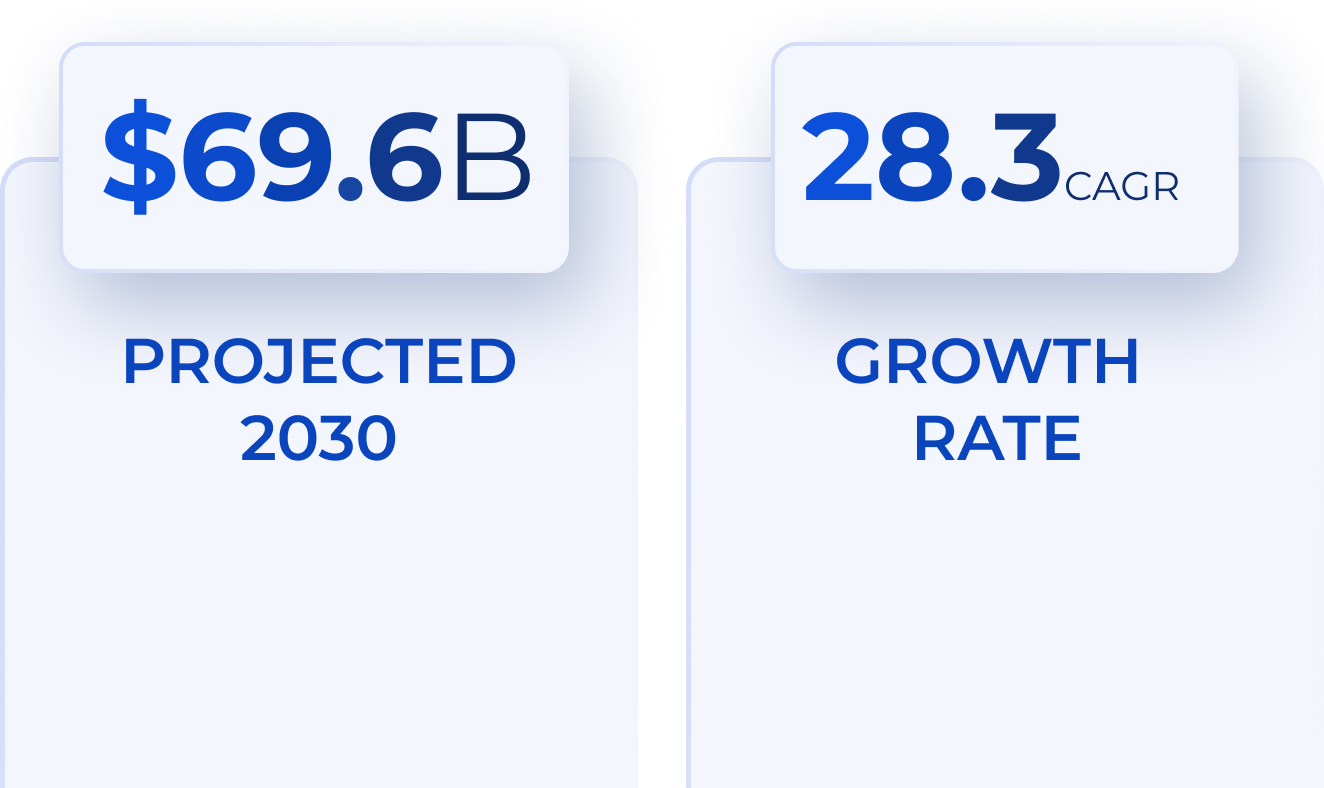
Enterprise immersive training has shifted from exploratory pilots to a core capability for global organizations. The immersive training market reached $16.4 billion in 2024 and is on track to hit $69.6 billion by 2030 (28.3% CAGR) as virtual reality captures the largest technology share.1
Within that mix, the enterprise VR training market is projected to scale from $7.6 billion in 2025 to more than $33 billion early in the next decade, fueled by repeatable ROI evidence and lower deployment costs.2
Fortune 500 adoption now exceeds 75%, with large enterprises three times more likely than mid-size peers to rely on VR for mission-critical training.3 The industrial metaverse market, blending digital twins, collaborative design, and immersive training, is projected to reach $170 billion by 2030 at 37% CAGR.8
Key Finding: Organizations that scale VR training beyond 3,000 learners achieve 52% cost savings versus classroom delivery, with training time reductions of 60-75% and safety incident reductions of 35-50%.

Proven Business Outcomes
- Training time reductions of 60-75% for manufacturing, logistics, and customer-service cohorts4
- Cost parity achieved at 375 learners and 52% savings beyond 3,000 learners (PwC model)5
- Safety incidents reduced by 35-50% in energy and industrial rollouts through hazard rehearsal6
- Learner confidence uplift of 200-275% and retention increases of 70% vs classroom7
- Walmart reduced training time from 90 to 20 minutes with 30% higher satisfaction
Enterprise immersive training has shifted from exploratory pilots to a core capability for global organizations. The immersive training market reached $16.4 billion in 2024 and is on track to hit $69.6 billion by 2030 (28.3% CAGR) as virtual reality captures the largest technology share.1
Within that mix, the enterprise VR training market is projected to scale from $7.6 billion in 2025 to more than $33 billion early in the next decade, fueled by repeatable ROI evidence and lower deployment costs.2
Fortune 500 adoption now exceeds 75%, with large enterprises three times more likely than mid-size peers to rely on VR for mission-critical training.3 The industrial metaverse market, blending digital twins, collaborative design, and immersive training, is projected to reach $170 billion by 2030 at 37% CAGR.8
Key Finding: Organizations that scale VR training beyond 3,000 learners achieve 52% cost savings versus classroom delivery, with training time reductions of 60-75% and safety incident reductions of 35-50%.
Proven Business Outcomes
- Training time reductions of 60-75% for manufacturing, logistics, and customer-service cohorts4
- Cost parity achieved at 375 learners and 52% savings beyond 3,000 learners (PwC model)5
- Safety incidents reduced by 35-50% in energy and industrial rollouts through hazard rehearsal6
- Learner confidence uplift of 200-275% and retention increases of 70% vs classroom7
- Walmart reduced training time from 90 to 20 minutes with 30% higher satisfaction
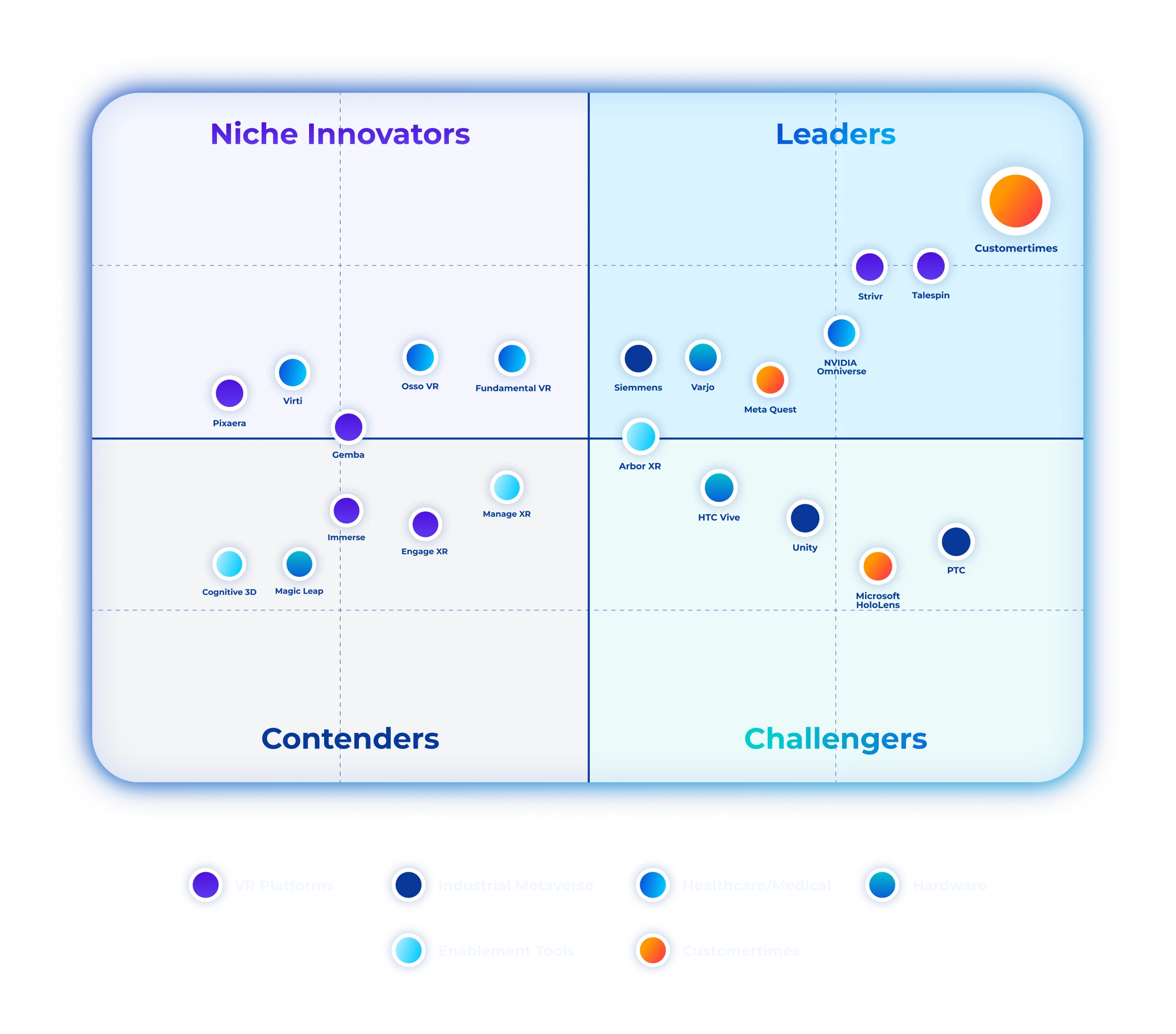
2025 Immersive Solutions Innovation Matrix
Vendor positioning based on Portfolio Attractiveness (breadth, ROI proof points, scalability) and Competitive Strength (market presence, enterprise adoption, ecosystem)
Vendor Categories
35+ vendors analyzed across six key categories for enterprise immersive solutions
Enterprise VR Platforms
$7.6B (2025) → $33B+ (2033)
Full-stack training platforms with content authoring, analytics, and enterprise-grade deployment capabilities.
Strivr
Leader
Talespin
Leader
Virti
Healthcare Focus
Pixaera
Safety Training
Gemba
Manufacturing
Immerse
Enterprise
Industrial Metaverse
$27.7B (2024) → $170B (2030) at 37% CAGR
Digital twin platforms enabling virtual factory planning, collaborative design, and immersive operations.
NVIDIA Omniverse
Leader
Siemens Xcelerator
Manufacturing
PTC Vuforia
AR/MR
Unity Industry
Platform
Unreal Engine
Visualization
Hexagon Nexus
Industrial
Healthcare & Medical VR
$4.18B (2024) → $46.4B (2032)
Surgical simulation, clinical training, and medical education platforms with validated outcomes.
Osso VR
Surgical
FundamentalVR
Haptics
Oxford Medical Sim
Clinical
Bodyswaps
Soft Skills
Virti
Multi-use
Enterprise Hardware
Device ecosystem for enterprise deployments
Enterprise-grade VR/MR headsets with fleet management, security, and support capabilities.
Meta Quest Business
Volume Leader
Varjo
Premium
HTC Vive Business
Enterprise
Microsoft HoloLens
MR
Magic Leap 2
Medical MR
Lenovo ThinkReality
Enterprise
Enablement & Analytics
Device management, analytics, and content distribution
MDM, analytics platforms, and content orchestration tools for scaling enterprise VR deployments.
ArborXR
MDM Leader
ManageXR
Device Mgmt
Cognitive3D
Analytics
Talespin Radar
Behavioral
Motive.io
Content
Content Studios & Integrators
Custom immersive content development
Specialized studios creating custom VR experiences and providing end-to-end implementation services.
Customertimes XR
Featured
Moth+Flame
DEI Focus
SweetRush
L&D
VRAI
Aviation
Taqtile
Field Service
Featured Vendor Profiles
Detailed analysis of leading immersive solution providers
Customertimes XR Studio
Immersive Solutions Integrator
Featured
Portfolio
Strength
Key Strengths
- End-to-end immersive delivery: strategy, content, integration, support
- Deep Salesforce, Service Cloud, and CRM integration expertise
- XR labs in New York, Kyiv, Riga, and Warsaw
- Industry playbooks for healthcare, manufacturing, and retail
- Data engineering teams connecting VR telemetry to BI/CRM
Strivr
Enterprise VR Platform
Portfolio
Strength
Key Strengths
- Full-stack VR platform with content studio and analytics
- Fortune 100 track record (Walmart, Verizon, Bank of America)
- Proven 30% retention improvement at scale
- LMS integrations (Workday, Cornerstone)
NVIDIA Omniverse
Industrial Metaverse Platform
Portfolio
Strength
Key Strengths
- Real-time digital twins with Universal Scene Description (USD)
- Physics-based simulation with RTX GPUs
- Connectors for Siemens NX, Autodesk, Unreal
- Multi-user photorealistic collaboration
Osso VR
Surgical VR Training
Portfolio
Strength
Key Strengths
- Peer-reviewed surgical simulations (Stanford validation)
- Partnerships with J&J, Stryker, Zimmer Biomet
- Cloud-based content distribution
- xAPI/SCORM LMS integration
Varjo
Enterprise MR Hardware
Portfolio
Strength
Key Strengths
- Human-eye resolution XR headsets (XR-3, VR-3)
- Used by Boeing, Lockheed Martin for flight training
- Reality Cloud for streamed collaboration
- Integrated LiDAR depth mapping
Talespin
Conversational XR Platform
Portfolio
Strength
Key Strengths
- CoPilot virtual human learning for soft skills
- Generative AI for rapid scenario creation
- Radar analytics for behavioral assessment
- Enterprise clients: PwC, Accenture, Deloitte
Vendor Deep Dives: In-Depth Market Intelligence
Comprehensive analysis of leading immersive solution providers based on live market research. Updated December 2025 using AI-powered research to deliver the most current vendor intelligence for enterprise decision-makers.
Strivr
Enterprise VR Leader
$93M+
TOTAL FUNDING
1M+
LEARNERS
2015
FOUNDED
Platform Capabilities
- Full-stack VR platform: content creation, device management, analytics
- Patented performance prediction algorithms from Stanford VR lab
- 100+ data points captured per second during training
- Device-agnostic: Apple Vision Pro, Meta Quest, Pico, HTC Vive
- Native LMS integrations: Workday, Cornerstone, custom APIs
- Generative AI for accelerated content development (2024)
Business Model & Pricing
- Annual revenue: $43.8M (2024)
- Enterprise subscription + content studio services
- VR training: $327/person initially; $115/person at scale (3 years)
- 52% cost savings vs classroom at 3,000+ learners
- ROI break-even: 375 learners (PwC study)
Key Investors
- Georgian Partners (Series B lead)
- Accenture Ventures
- Workday Ventures
- Bank of America
- GreatPoint Ventures, Franklin Templeton
2024-2025 Developments
- VR wellness partnership with Reulay and Healium
- Start Beyond partnership for APAC expansion
- Forbes Best Startup Employers 2024 recognition
- 2.5M+ immersive training experiences delivered
- 875,000+ unique learners trained
Enterprise Customer Portfolio
Strivr's Fortune 100 customer base demonstrates proven enterprise scalability with documented ROI:
Walmart (4,700 stores)
Bank of America
Verizon
Fidelity
MGM Resorts
Sprouts
FieldCore (GE)
Woolworths Australia
86%
Onboarding time Reduction
4x
Faster than Classroom
70%
Retention Improvement
97%
Confidence Post-Training
NVIDIA Omniverse
Industrial Metaverse OS
$115B
NVIDIA FY2025 REVENUE
300K+
DOWNLOADS
252+
ENTERPRISE DEPLOYMENTS
Platform Architecture
- OpenUSD foundation for 3D interoperability (50+ formats)
- RTX real-time ray tracing for photorealistic visualization
- NVIDIA Cosmos world foundation models for physical AI
- Cloud-native microservices architecture
- Nucleus collaboration hub for multi-user editing
- Isaac Sim for robotics and autonomous systems
Enterprise Pricing
- Omniverse Enterprise: $4,500/GPU/year subscription
- Requires NVIDIA RTX or data center GPUs
- Cloud deployment via DGX Cloud or AWS/Azure
- Developer tier: Free for individuals
- Professional services available for implementation
Integration Ecosystem
- Siemens PLM, Dassault CATIA, Autodesk Revit
- PTC, Bentley, Hexagon manufacturing
- Databricks for data analytics integration
- SAP Intelligent Product Recommendation
- Microsoft Azure, AWS Marketplace availability
2024-2025 Innovations
- Mega Blueprint for large-scale robot fleet simulation
- PhysicsNeMo: 150x faster CFD simulations
- Cosmos world models for synthetic training data
- "$50 trillion physical AI opportunity" positioning
- Digital Twins for AI-powered factories
Enterprise Case Studies
Global manufacturers leveraging Omniverse for digital twin operations and AI-powered factory optimization:
BMW (2.5M vehicles/year)
Foxconn (FODT Platform)
Pegatron (PEGAVERSE)
KION Group
Lowe's
Unilever
Lufthansa
Accenture
40%
FACTORY BUILD TIME REDUCTION
67%
DEFECT RATE DECREASE
150x
FASTER PHYSICS SIMS
2x
FASTER CONTENT CREATION
Osso VR
Healthcare VR Training
$109M
TOTAL FUNDING
100K+
HEALTHCARE PROS
40+
COUNTRIES
Clinical Capabilities
- 200+ surgical training modules across 12+ specialties
- 8 peer-reviewed publications validating effectiveness
- Cinema-quality anatomical models (ILM, Pixar talent)
- Hand Control: Controller-free surgical practice (2024)
- Apple Vision Pro support via Osso Health app
- Osso Nurse Training platform launch (Oct 2025)
Funding & Leadership
- Series C: $66M (2022) led by Oak HC/FT
- Key investors: Tiger Global, Kaiser Permanente
- Founder: Dr. Justin Barad (UCLA/Harvard surgeon)
- Est. revenue: $65.3M (2024)
- ~225 employees globally
Medical Device Partners
- All Top 5 orthopedic device companies
- Johnson & Johnson
- Stryker
- Zimmer Biomet
- Smith & Nephew
2024-2025 Milestones
- American College of Cardiology partnership (LAAO)
- TIME World's Top EdTech Companies recognition
- Pharmaceutical XR solutions expansion (Oct 2024)
- Osso Nurse Training with EBSCO integration
- Osso Loop web-based learning companion
Academic & Hospital Partners
Leading medical institutions deploying Osso VR for surgical education and residency training:
Johns Hopkins
UCLA
Stanford
Brown University
Hospital for Special Surgery
Wake Forest Baptist
NYU
Mayo Clinic (research)
230%
SURGICAL ACCURACY GAIN
20%
FASTER PROCEDURES
40-60%
TIME SAVINGS (PFIZER)
38%
MORE STEPS CORRECT
Meta Quest for Business
Enterprise Hardware Platform
$10B+
REALITY LABS INVESTMENT
$299
QUEST 3S PRICE
76K
META EMPLOYEES
Hardware Portfolio
- Meta Quest 3: $499 (512GB), premium MR, pancake lenses
- Meta Quest 3S: $299 (128GB), best value, Fresnel lenses
- Snapdragon XR2 Gen 2 processor (both models)
- Full-color passthrough for mixed reality
- 2 years Horizon Managed Services included
- Quest Pro discontinued (late 2024)
Enterprise Features
- Rebranded: Meta Horizon Managed Solutions (Feb 2025)
- Shared Mode for multi-user device deployments
- Casting for real-time training supervision
- Private app deployment via APK or business channel
- 30-day free trial per device
MDM Integrations
- ArborXR (official partner, Feb 2025)
- ManageXR
- Microsoft Intune
- Ivanti (MobileIron)
- Omnissa Workspace ONE
Enterprise Use Cases
- Accenture: 5,000+ virtual events at "Nth Floor"
- AWS: 20,000+ customers via VR facility tours
- Pfizer: 40-60% time savings on vaccine training
- Mortenson: $26,500 saved from single design fix
- Mondelēz: Week-to-hours design cycle reduction
Global Enterprise Deployments
Leading organizations deploying Meta Quest hardware for immersive training and collaboration:
Accenture (Nth Floor)
Pfizer
Amazon Web Services
Lufthansa
LifeArc
Mortenson
Mondelēz
Centre for Healthcare Innovation
10x
ENGAGEMENT (LUFTHANSA)
5K+
ACCENTURE VR EVENTS
20K+
AWS VR TOUR CUSTOMERS
$299
ENTRY PRICE POINT
Bundlar
XR Enablement
22
EMPLOYEES
Platform Capabilities
- AI-powered content creation and adaptive learning
- Real-time analytics and performance tracking
- Cloud-based platform with enterprise scalability
- No-code authoring tools for rapid content creation
- LMS/LXP integration (Workday, Cornerstone, SAP)
- Multi-user collaboration and remote training
Business Model & Pricing
- Subscription-based licensing model
- Custom enterprise pricing
- Documented ROI and cost savings
Key Customers
- Fortune 500 enterprise clients
- Global manufacturing leaders
- Healthcare organizations
- Training & development teams
2024-2025 Developments
- Strategic acquisition expanding capabilities
- New strategic partnership announced
- New product or feature launch in 2024-2025
- Apple Vision Pro support added
- New funding round or investment
Notable Enterprise Customers
GE
Microsoft
Amazon
EY
UPS
MIT
Campfire
Enterprise VR Platform
$4.2B+
FUNDING
2018
FOUNDED
Platform Capabilities
- Real-time analytics and performance tracking
- Cloud-based platform with enterprise scalability
- Multi-device support (Quest, HoloLens, Pico)
- High-fidelity simulations for hands-on practice
- Digital twin technology for operational modeling
- Multi-user collaboration and remote training
Business Model & Pricing
- $1,500 per user annually, with minimum seat requirements applying to qualify for
- Subscription-based licensing model
- Per-user/per-seat licensing available
- Custom enterprise pricing
- Free tier or trial available
Key Customers
- Fortune 500 enterprise clients
- Global manufacturing leaders
- Healthcare organizations
- Training & development teams
2024-2025 Developments
- Strategic acquisition expanding capabilities
- Meta Quest 3 optimization
- New funding round or investment
- Geographic or market expansion
Notable Enterprise Customers
Fidelity
Boeing
Airbus
GE
Microsoft
Amazon
Meta
Oxford Medical Simulation
Healthcare VR Specialist
$2.7B+
FUNDING
2017
FOUNDED
122
EMPLOYEES
Platform Capabilities
- Immersive VR training simulations for workforce development
- AI-powered content creation and adaptive learning
- Cloud-based platform with enterprise scalability
- No-code authoring tools for rapid content creation
- LMS/LXP integration (Workday, Cornerstone, SAP)
- High-fidelity simulations for hands-on practice
Business Model & Pricing
- Subscription-based licensing model
- Custom enterprise pricing
Key Customers
- Fortune 500 enterprise clients
- Global manufacturing leaders
- Healthcare organizations
- Training & development teams
2024-2025 Developments
- Strategic acquisition expanding capabilities
- New strategic partnership announced
- New product or feature launch in 2024-2025
- AI and machine learning integration
- New funding round or investment
Notable Enterprise Customers
Fidelity
Ford
GE
Meta
EY
UPS
NHS
MIT
74%
PERFORMANCE IMPROVEMENT
74%
COST SAVINGS
Pico Enterprise
XR Hardware
$1.5B+
FUNDING
Platform Capabilities
- Immersive VR training simulations for workforce development
- AI-powered content creation and adaptive learning
- Real-time analytics and performance tracking
- Cloud-based platform with enterprise scalability
- LMS/LXP integration (Workday, Cornerstone, SAP)
- High-fidelity simulations for hands-on practice
Business Model & Pricing
- $200 per user monthly for effective training solutions while consumer applicatio
- Subscription-based licensing model
- Per-user/per-seat licensing available
- Custom enterprise pricing
- Documented ROI and cost savings
Key Customers
- Fortune 500 enterprise clients
- Global manufacturing leaders
- Healthcare organizations
- Training & development teams
2024-2025 Developments
- Strategic acquisition expanding capabilities
- New strategic partnership announced
- New product or feature launch in 2024-2025
- Meta Quest 3 optimization
- New funding round or investment
Notable Enterprise Customers
Fidelity
Ford
GE
Microsoft
Meta
EY
UPS
MIT
30%
PERFORMANCE IMPROVEMENT
Pxi Portal
XR Enablement
Platform Capabilities
- Immersive VR training simulations for workforce development
- AI-powered content creation and adaptive learning
- Real-time analytics and performance tracking
- LMS/LXP integration (Workday, Cornerstone, SAP)
- High-fidelity simulations for hands-on practice
- Digital twin technology for operational modeling
Business Model & Pricing
- Contact for enterprise pricing
- Custom licensing based on scale
- Professional services available
Key Customers
- Fortune 500 enterprise clients
- Global manufacturing leaders
- Healthcare organizations
- Training & development teams
2024-2025 Developments
- New strategic partnership announced
- Apple Vision Pro support added
- Meta Quest 3 optimization
- New funding round or investment
- Geographic or market expansion
Notable Enterprise Customers
Fidelity
Toyota
Siemens
GE
Microsoft
Meta
EY
Unreal Engine for Enterprise
Industrial Metaverse
$22.5B+
FUNDING
1991
FOUNDED
900
EMPLOYEES
Platform Capabilities
- Immersive VR training simulations for workforce development
- Real-time analytics and performance tracking
- Cloud-based platform with enterprise scalability
- High-fidelity simulations for hands-on practice
- Digital twin technology for operational modeling
- Multi-user collaboration and remote training
Business Model & Pricing
- $1,850 per seat per year, positioning it between Adobe Creative Cloud (approxima
- Subscription-based licensing model
- Per-user/per-seat licensing available
- Custom enterprise pricing
- Free tier or trial available
Key Customers
- Fortune 500 enterprise clients
- Global manufacturing leaders
- Healthcare organizations
- Training & development teams
2024-2025 Developments
- Strategic acquisition expanding capabilities
- New strategic partnership announced
- Apple Vision Pro support added
- New funding round or investment
- Geographic or market expansion
Notable Enterprise Customers
Fidelity
Airbus
BMW
Ford
GE
Microsoft
Amazon
Meta
Vixel
Content Studio
2014
FOUNDED
Platform Capabilities
- AI-powered content creation and adaptive learning
- Real-time analytics and performance tracking
- Cloud-based platform with enterprise scalability
- LMS/LXP integration (Workday, Cornerstone, SAP)
- High-fidelity simulations for hands-on practice
- Digital twin technology for operational modeling
Business Model & Pricing
- Subscription-based licensing model
- Custom enterprise pricing
- Documented ROI and cost savings
Key Customers
- Fortune 500 enterprise clients
- Global manufacturing leaders
- Healthcare organizations
- Training & development teams
2024-2025 Developments
- New strategic partnership announced
- Meta Quest 3 optimization
- New funding round or investment
- Geographic or market expansion
Notable Enterprise Customers
Fidelity
Siemens
GE
Meta
EY
UPS
MIT
Arborxr
XR Enablement
$8B+
FUNDING
2020
FOUNDED
Platform Capabilities
- Immersive VR training simulations for workforce development
- Real-time analytics and performance tracking
- Cloud-based platform with enterprise scalability
- LMS/LXP integration (Workday, Cornerstone, SAP)
- High-fidelity simulations for hands-on practice
- Multi-user collaboration and remote training
Business Model & Pricing
- $7 per device per month when billed annually ($8 billed monthly) and includes fu
- Subscription-based licensing model
- Custom enterprise pricing
- Free tier or trial available
- Documented ROI and cost savings
Key Customers
- Fortune 500 enterprise clients
- Global manufacturing leaders
- Healthcare organizations
- Training & development teams
2024-2025 Developments
- Strategic acquisition expanding capabilities
- New strategic partnership announced
- New product or feature launch in 2024-2025
- Apple Vision Pro support added
- Meta Quest 3 optimization
Notable Enterprise Customers
Walmart
Bank of America
Ford
GE
Microsoft
Meta
Pfizer
75%
PERFORMANCE IMPROVEMENT
Bodyswaps
Healthcare VR Specialist
$38B+
FUNDING
2020
FOUNDED
45
EMPLOYEES
Platform Capabilities
- Immersive VR training simulations for workforce development
- AI-powered content creation and adaptive learning
- Cloud-based platform with enterprise scalability
- No-code authoring tools for rapid content creation
- LMS/LXP integration (Workday, Cornerstone, SAP)
- Multi-device support (Quest, HoloLens, Pico)
Business Model & Pricing
- Subscription-based licensing model
- Per-user/per-seat licensing available
- Custom enterprise pricing
- Free tier or trial available
- Documented ROI and cost savings
Key Customers
- Fortune 500 enterprise clients
- Global manufacturing leaders
- Healthcare organizations
- Training & development teams
2024-2025 Developments
- Strategic acquisition expanding capabilities
- New strategic partnership announced
- Meta Quest 3 optimization
- New funding round or investment
- Geographic or market expansion
Notable Enterprise Customers
Ford
GE
Meta
PwC
EY
UPS
MIT
4x
SPEED VS TRADITIONAL
Cognitive 3D
XR Enablement
$21B+
FUNDING
2015
FOUNDED
22
EMPLOYEES
Platform Capabilities
- Immersive VR training simulations for workforce development
- Real-time analytics and performance tracking
- Cloud-based platform with enterprise scalability
- LMS/LXP integration (Workday, Cornerstone, SAP)
- High-fidelity simulations for hands-on practice
- Multi-user collaboration and remote training
Business Model & Pricing
- $0.16 per user per month, a cost that becomes increasingly favorable as organiza
- Subscription-based licensing model
- Per-user/per-seat licensing available
- Custom enterprise pricing
- Free tier or trial available
Key Customers
- Fortune 500 enterprise clients
- Global manufacturing leaders
- Healthcare organizations
- Training & development teams
2024-2025 Developments
- Strategic acquisition expanding capabilities
- New strategic partnership announced
- New product or feature launch in 2024-2025
- Meta Quest 3 optimization
- New funding round or investment
Notable Enterprise Customers
Walmart
Bank of America
Verizon
Fidelity
Boeing
GE
Microsoft
Meta
Customertimes XR Studio
Report Author
$316M+
ANNUAL REVENUE
1,800+
EMPLOYEES
2007
FOUNDED
Industrial Metaverse Platform
- Gaussian splatting for photorealistic digital twins
- AI-powered immersive training simulations
- Real-time IoT integration and predictive maintenance
- Multi-device: Quest 3, HoloLens, Pico, Apple Vision Pro
- Salesforce, SAP, Microsoft Dynamics integration
- Enterprise analytics with skills measurement
Key Differentiators
- End-to-end: Strategy, development, deployment, support
- 18+ years enterprise consulting experience
- CRM + XR integration specialists
- Global delivery: US, Europe, APAC
- 4x faster training, 43% error reduction proven
Industry Solutions
- Manufacturing: Safety, equipment, quality training
- Healthcare: Surgical simulation, clinical workflows
- Retail: Planogram execution, merchandising
- Energy: Safety protocols, remote assistance
- Pharma: GxP compliance, lab training
2024-2025 Innovations
- Snowflake Services Select Tier Partner (2025)
- SAP America Official Service Partner
- ISG Paragon Award for Innovation
- 100+ Spiff implementations milestone
- Expanded AI/ML and GenAI capabilities
Why Choose Customertimes for Your Immersive Journey?
As the author of this report and a leader in enterprise XR solutions, Customertimes combines deep domain expertise with cutting-edge immersive technology to deliver measurable business outcomes:
Fortune 500 Clients
Global CPG Leaders
Healthcare Systems
Manufacturing Giants
Energy & Utilities
Financial Services
4x
FASTER TRAINING
43%
ERROR REDUCTION
40%
FASTER IMPLEMENTATION
35%
LOWER TCO
Engage XR
Enterprise VR Platform
$22M+
FUNDING
2014
FOUNDED
80
EMPLOYEES
Platform Capabilities
- Immersive VR training simulations for workforce development
- AI-powered content creation and adaptive learning
- Real-time analytics and performance tracking
- No-code authoring tools for rapid content creation
- LMS/LXP integration (Workday, Cornerstone, SAP)
- High-fidelity simulations for hands-on practice
Business Model & Pricing
- $130 per user annually (or €125 per year), providing access to the full ENGAGE f
- Subscription-based licensing model
- Per-user/per-seat licensing available
- Custom enterprise pricing
- Documented ROI and cost savings
Key Customers
- Fortune 500 enterprise clients
- Global manufacturing leaders
- Healthcare organizations
- Training & development teams
2024-2025 Developments
- Strategic acquisition expanding capabilities
- New strategic partnership announced
- AI and machine learning integration
- Meta Quest 3 optimization
- New funding round or investment
Notable Enterprise Customers
Fidelity
Ford
GE
Microsoft
Meta
PwC
EY
Fundamental VR
Healthcare VR Specialist
$37M+
FUNDING
Platform Capabilities
- Immersive VR training simulations for workforce development
- Real-time analytics and performance tracking
- LMS/LXP integration (Workday, Cornerstone, SAP)
- High-fidelity simulations for hands-on practice
- Digital twin technology for operational modeling
- Haptic feedback for realistic tactile experiences
Business Model & Pricing
- Subscription-based licensing model
- Per-user/per-seat licensing available
- Custom enterprise pricing
Key Customers
- Fortune 500 enterprise clients
- Global manufacturing leaders
- Healthcare organizations
- Training & development teams
2024-2025 Developments
- Strategic acquisition expanding capabilities
- New strategic partnership announced
- New product or feature launch in 2024-2025
- Apple Vision Pro support added
- Meta Quest 3 optimization
Notable Enterprise Customers
Fidelity
GE
Microsoft
Meta
Medtronic
Mayo Clinic
Deloitte
EY
Gemba
Enterprise VR Platform
$18M+
FUNDING
2013
FOUNDED
Platform Capabilities
- Immersive VR training simulations for workforce development
- AI-powered content creation and adaptive learning
- Real-time analytics and performance tracking
- No-code authoring tools for rapid content creation
- LMS/LXP integration (Workday, Cornerstone, SAP)
- High-fidelity simulations for hands-on practice
Business Model & Pricing
- Subscription-based licensing model
- Custom enterprise pricing
Key Customers
- Fortune 500 enterprise clients
- Global manufacturing leaders
- Healthcare organizations
- Training & development teams
2024-2025 Developments
- Strategic acquisition expanding capabilities
- New strategic partnership announced
- New funding round or investment
- Geographic or market expansion
Notable Enterprise Customers
Fidelity
BMW
Mercedes
Ford
Toyota
GE
Microsoft
Hexagon Nexus
Industrial Metaverse
1975
FOUNDED
24,800
EMPLOYEES
Platform Capabilities
- Real-time analytics and performance tracking
- Cloud-based platform with enterprise scalability
- High-fidelity simulations for hands-on practice
- Digital twin technology for operational modeling
- Multi-user collaboration and remote training
- Advanced analytics and skills measurement
Business Model & Pricing
- Subscription-based licensing model
- Custom enterprise pricing
Key Customers
- Fortune 500 enterprise clients
- Global manufacturing leaders
- Healthcare organizations
- Training & development teams
2024-2025 Developments
- Strategic acquisition expanding capabilities
- New strategic partnership announced
- New product or feature launch in 2024-2025
- Apple Vision Pro support added
- Meta Quest 3 optimization
Notable Enterprise Customers
Fidelity
Siemens
GE
Microsoft
Amazon
Meta
EY
UPS
25%
PERFORMANCE IMPROVEMENT
Htc Vive Business
XR Hardware
Platform Capabilities
- High-fidelity simulations for hands-on practice
- Multi-user collaboration and remote training
- Enterprise-grade immersive platform
- Scalable deployment infrastructure
- Comprehensive analytics dashboard
- Professional services and support
Business Model & Pricing
- Custom enterprise pricing
Key Customers
- Fortune 500 enterprise clients
- Global manufacturing leaders
- Healthcare organizations
- Training & development teams
2024-2025 Developments
- Meta Quest 3 optimization
Notable Enterprise Customers
GE
Meta
Immerse
Enterprise VR Platform
2017
FOUNDED
124
EMPLOYEES
Platform Capabilities
- AI-powered content creation and adaptive learning
- Real-time analytics and performance tracking
- High-fidelity simulations for hands-on practice
- Multi-user collaboration and remote training
- Safety and compliance training modules
Business Model & Pricing
- Subscription-based licensing model
- Custom enterprise pricing
- Free tier or trial available
- Documented ROI and cost savings
Key Customers
- Fortune 500 enterprise clients
- Global manufacturing leaders
- Healthcare organizations
- Training & development teams
2024-2025 Developments
- Strategic acquisition expanding capabilities
- New strategic partnership announced
- New product or feature launch in 2024-2025
- AI and machine learning integration
- Meta Quest 3 optimization
Notable Enterprise Customers
GE
Microsoft
Meta
EY
UPS
Harvard
MIT
10x
SPEED VS TRADITIONAL
Lenovo Thinkreality
XR Hardware
$69.1B+
FUNDING
77,000
EMPLOYEES
Platform Capabilities
- Immersive VR training simulations for workforce development
- AI-powered content creation and adaptive learning
- Real-time analytics and performance tracking
- Cloud-based platform with enterprise scalability
- High-fidelity simulations for hands-on practice
- Multi-user collaboration and remote training
Business Model & Pricing
- Custom enterprise pricing
- Documented ROI and cost savings
Key Customers
- Fortune 500 enterprise clients
- Global manufacturing leaders
- Healthcare organizations
- Training & development teams
2024-2025 Developments
- Strategic acquisition expanding capabilities
- New strategic partnership announced
- New product or feature launch in 2024-2025
- AI and machine learning integration
- Apple Vision Pro support added
Notable Enterprise Customers
GE
Microsoft
Meta
EY
MIT
Magic Leap 2
XR Hardware
$4.5B+
FUNDING
2010
FOUNDED
1,100
EMPLOYEES
Platform Capabilities
- Real-time analytics and performance tracking
- High-fidelity simulations for hands-on practice
- Multi-user collaboration and remote training
- Enterprise device management and deployment
- Surgical simulation with realistic scenarios
- Medical training and clinical simulations
Business Model & Pricing
- $75 per user monthly for basic applications to $300 to $1,000 per user monthly f
- Subscription-based licensing model
- Per-user/per-seat licensing available
- Custom enterprise pricing
- Documented ROI and cost savings
Key Customers
- Fortune 500 enterprise clients
- Global manufacturing leaders
- Healthcare organizations
- Training & development teams
2024-2025 Developments
- Strategic acquisition expanding capabilities
- New strategic partnership announced
- New product or feature launch in 2024-2025
- AI and machine learning integration
- New funding round or investment
Notable Enterprise Customers
Fidelity
Mercedes
Ford
Siemens
GE
Microsoft
Meta
Manager XR
XR Enablement
21
EMPLOYEES
Platform Capabilities
- Real-time analytics and performance tracking
- Cloud-based platform with enterprise scalability
- High-fidelity simulations for hands-on practice
- Multi-user collaboration and remote training
- Advanced analytics and skills measurement
- Developer SDK and API for custom integrations
Business Model & Pricing
- $6 per device per month annually or $7 monthly, includes fundamental capabilitie
- Subscription-based licensing model
- Custom enterprise pricing
- Documented ROI and cost savings
Key Customers
- Fortune 500 enterprise clients
- Global manufacturing leaders
- Healthcare organizations
- Training & development teams
2024-2025 Developments
- Strategic acquisition expanding capabilities
- New strategic partnership announced
- Apple Vision Pro support added
- Meta Quest 3 optimization
- New funding round or investment
Notable Enterprise Customers
Ford
Toyota
GE
Microsoft
Amazon
Meta
Accenture
Meta Quest Business
XR Hardware
$10B+
FUNDING
2004
FOUNDED
Platform Capabilities
- Immersive VR training simulations for workforce development
- Real-time analytics and performance tracking
- High-fidelity simulations for hands-on practice
- Haptic feedback for realistic tactile experiences
- Multi-user collaboration and remote training
- Enterprise device management and deployment
Business Model & Pricing
- Subscription-based licensing model
- Custom enterprise pricing
- Free tier or trial available
- Documented ROI and cost savings
Key Customers
- Fortune 500 enterprise clients
- Global manufacturing leaders
- Healthcare organizations
- Training & development teams
2024-2025 Developments
- New strategic partnership announced
- New product or feature launch in 2024-2025
- Meta Quest 3 optimization
- Geographic or market expansion
- Platform feature enhancements
Notable Enterprise Customers
Fidelity
Ford
GE
Microsoft
Amazon
Meta
Pfizer
10%
COST SAVINGS
Microsoft Hololens
XR Hardware
$22B+
FUNDING
1975
FOUNDED
100
EMPLOYEES
Platform Capabilities
- Real-time analytics and performance tracking
- High-fidelity simulations for hands-on practice
- Multi-user collaboration and remote training
- Enterprise device management and deployment
- Surgical simulation with realistic scenarios
- Medical training and clinical simulations
Business Model & Pricing
- Subscription-based licensing model
- Custom enterprise pricing
- Documented ROI and cost savings
Key Customers
- Fortune 500 enterprise clients
- Global manufacturing leaders
- Healthcare organizations
- Training & development teams
2024-2025 Developments
- Strategic acquisition expanding capabilities
- New strategic partnership announced
- New product or feature launch in 2024-2025
- AI and machine learning integration
- Apple Vision Pro support added
Notable Enterprise Customers
Fidelity
Ford
GE
Microsoft
Meta
EY
MIT
US Army
Moth+Flame
Content Studio
$2.35B+
FUNDING
2015
FOUNDED
39
EMPLOYEES
Platform Capabilities
- Immersive VR training simulations for workforce development
- AI-powered content creation and adaptive learning
- Real-time analytics and performance tracking
- Cloud-based platform with enterprise scalability
- LMS/LXP integration (Workday, Cornerstone, SAP)
- Multi-device support (Quest, HoloLens, Pico)
Business Model & Pricing
- Subscription-based licensing model
- Per-user/per-seat licensing available
- Custom enterprise pricing
- Documented ROI and cost saving
Key Customers
- Fortune 500 enterprise clients
- Global manufacturing leaders
- Healthcare organizations
- Training & development teams
2024-2025 Developments
- New strategic partnership announced
- New product or feature launch in 2024-2025
- AI and machine learning integration
- Meta Quest 3 optimization
- New funding round or investment
Notable Enterprise Customers
Fidelity
GE
Meta
Accenture
EY
AT&T
MIT
Motive.io
XR Enablement
Platform Capabilities
- Immersive VR training simulations for workforce development
- AI-powered content creation and adaptive learning
- Real-time analytics and performance tracking
- No-code authoring tools for rapid content creation
- LMS/LXP integration (Workday, Cornerstone, SAP)
- High-fidelity simulations for hands-on practice
Business Model & Pricing
- $81,800 per year, Tier B with four authoring licenses and one thousand learner l
- Custom enterprise pricing
- Documented ROI and cost savings
Key Customers
- Fortune 500 enterprise clients
- Global manufacturing leaders
- Healthcare organizations
- Training & development teams
2024-2025 Developments
- New strategic partnership announced
- AI and machine learning integration
- New funding round or investment
- Geographic or market expansion
- Developer SDK or API updates
Notable Enterprise Customers
GE
Microsoft
Amazon
Meta
Accenture
EY
Chevron
MIT
Pixaera
Enterprise VR Platform
$5.7M+
FUNDING
2020
FOUNDED
53
EMPLOYEES
Platform Capabilities
- Immersive VR training simulations for workforce development
- Real-time analytics and performance tracking
- LMS/LXP integration (Workday, Cornerstone, SAP)
- Multi-device support (Quest, HoloLens, Pico)
- High-fidelity simulations for hands-on practice
- Multi-user collaboration and remote training
Business Model & Pricing
- Subscription-based licensing model
- Custom enterprise pricing
- Documented ROI and cost savings
Key Customers
- Fortune 500 enterprise clients
- Global manufacturing leaders
- Healthcare organizations
- Training & development teams
2024-2025 Developments
- Strategic acquisition expanding capabilities
- New strategic partnership announced
- New product or feature launch in 2024-2025
- Meta Quest 3 optimization
- New funding round or investment
Notable Enterprise Customers
GE
Meta
Deloitte
EY
Shell
BP
UPS
MIT
75%
KNOWLEDGE RETENTION
Ptc Vuforia
Industrial Metaverse
$590M+
FUNDING
2008
FOUNDED
141
EMPLOYEES
Platform Capabilities
- AI-powered content creation and adaptive learning
- Real-time analytics and performance tracking
- Cloud-based platform with enterprise scalability
- No-code authoring tools for rapid content creation
- Digital twin technology for operational modeling
- Multi-user collaboration and remote training
Business Model & Pricing
- Subscription-based licensing model
- Per-user/per-seat licensing available
- Custom enterprise pricing
- Documented ROI and cost savings
Key Customers
- Fortune 500 enterprise clients
- Global manufacturing leaders
- Healthcare organizations
- Training & development teams
2024-2025 Developments
- Strategic acquisition expanding capabilities
- New strategic partnership announced
- AI and machine learning integration
- Apple Vision Pro support added
- New funding round or investment
Notable Enterprise Customers
Boeing
Siemens
GE
Microsoft
Meta
EY
UPS
Siemens Xcelerator
Industrial Metaverse
$6B+
FUNDING
1985
FOUNDED
3,500
EMPLOYEES
Platform Capabilities
- AI-powered content creation and adaptive learning
- Real-time analytics and performance tracking
- Cloud-based platform with enterprise scalability
- High-fidelity simulations for hands-on practice
- Digital twin technology for operational modeling
- Multi-user collaboration and remote training
Business Model & Pricing
- Custom enterprise pricing
- Documented ROI and cost savings
Key Customers
- Fortune 500 enterprise clients
- Global manufacturing leaders
- Healthcare organizations
- Training & development teams
2024-2025 Developments
- Strategic acquisition expanding capabilities
- New strategic partnership announced
- New product or feature launch in 2024-2025
- Apple Vision Pro support added
- Meta Quest 3 optimization
Notable Enterprise Customers
Fidelity
Boeing
Siemens
GE
Microsoft
Amazon
Meta
Sweetrush
Content Studio
$5M+
FUNDING
2001
FOUNDED
248
EMPLOYEES
Platform Capabilities
- AI-powered content creation and adaptive learning
- Real-time analytics and performance tracking
- LMS/LXP integration (Workday, Cornerstone, SAP)
- High-fidelity simulations for hands-on practice
- Advanced analytics and skills measurement
Business Model & Pricing
- Custom enterprise pricing
- Documented ROI and cost savings
Key Customers
- Fortune 500 enterprise clients
- Global manufacturing leaders
- Healthcare organizations
- Training & development teams
2024-2025 Developments
- Strategic acquisition expanding capabilities
- New strategic partnership announced
- New product or feature launch in 2024-2025
- AI and machine learning integration
- New funding round or investment
Notable Enterprise Customers
GE
GE
Hilton
MIT
Talespin
Enterprise VR Platform
$40M+
FUNDING
2015
FOUNDED
112
EMPLOYEES
Platform Capabilities
- Immersive VR training simulations for workforce development
- AI-powered content creation and adaptive learning
- Real-time analytics and performance tracking
- No-code authoring tools for rapid content creation
- LMS/LXP integration (Workday, Cornerstone, SAP)
- Multi-device support (Quest, HoloLens, Pico)
Business Model & Pricing
- Subscription-based licensing model
- Custom enterprise pricing
- Free tier or trial available
- Documented ROI and cost savings
Key Customers
- Fortune 500 enterprise clients
- Global manufacturing leaders
- Healthcare organizations
- Training & development teams
2024-2025 Developments
- Strategic acquisition expanding capabilities
- New strategic partnership announced
- New product or feature launch in 2024-2025
- Apple Vision Pro support added
- Meta Quest 3 optimization
Notable Enterprise Customers
Walmart
Bank of America
Verizon
MGM
Ford
GE
Meta
PwC
40%
PERFORMANCE IMPROVEMENT
Talespin Radar
XR Enablement
$5.16M+
FUNDING
2015
FOUNDED
106
EMPLOYEES
Platform Capabilities
- Immersive VR training simulations for workforce development
- AI-powered content creation and adaptive learning
- Real-time analytics and performance tracking
- Cloud-based platform with enterprise scalability
- No-code authoring tools for rapid content creation
- High-fidelity simulations for hands-on practice
Business Model & Pricing
- Subscription-based licensing model
- Custom enterprise pricing
- Documented ROI and cost savings
Key Customers
- Fortune 500 enterprise clients
- Global manufacturing leaders
- Healthcare organizations
- Training & development teams
2024-2025 Developments
- Strategic acquisition expanding capabilities
- New strategic partnership announced
- Apple Vision Pro support added
- New funding round or investment
- Geographic or market expansion
Notable Enterprise Customers
Walmart
Boeing
GE
Amazon
Meta
Johnson & Johnson
PwC
Accenture
4x
SPEED VS TRADITIONAL
Taqtile
XR Enablement
$8.4M+
FUNDING
2011
FOUNDED
50
EMPLOYEES
Platform Capabilities
- AI-powered content creation and adaptive learning
- Real-time analytics and performance tracking
- Digital twin technology for operational modeling
- Multi-user collaboration and remote training
- Advanced analytics and skills measurement
Business Model & Pricing
- Subscription-based licensing model
- Custom enterprise pricing
- Documented ROI and cost savings
Key Customers
- Fortune 500 enterprise clients
- Global manufacturing leaders
- Healthcare organizations
- Training & development teams
2024-2025 Developments
- Strategic acquisition expanding capabilities
- New strategic partnership announced
- Apple Vision Pro support added
- New funding round or investment
- Geographic or market expansion
Notable Enterprise Customers
Verizon
GE
Microsoft
Amazon
Meta
Accenture
EY
T-Mobile
Unity Industry
Industrial Metaverse
$184B+
FUNDING
2004
FOUNDED
3,200
EMPLOYEES
Platform Capabilities
- Immersive VR training simulations for workforce development
- Real-time analytics and performance tracking
- Cloud-based platform with enterprise scalability
- High-fidelity simulations for hands-on practice
- Digital twin technology for operational modeling
- Multi-user collaboration and remote training
Business Model & Pricing
- $200 per month per seat (or $2,310 annually when prepaid), and requires business
- Per-user/per-seat licensing available
- Custom enterprise pricing
- Free tier or trial available
- Documented ROI and cost savings
Key Customers
- Fortune 500 enterprise clients
- Global manufacturing leaders
- Healthcare organizations
- Training & development teams
2024-2025 Developments
- Strategic acquisition expanding capabilities
- New strategic partnership announced
- Apple Vision Pro support added
- New funding round or investment
- Geographic or market expansion
Notable Enterprise Customers
Fidelity
Siemens
GE
Microsoft
Amazon
Meta
EY
MIT
Varjo
XR Hardware
$200M+
FUNDING
2016
FOUNDED
Platform Capabilities
- Real-time analytics and performance tracking
- Cloud-based platform with enterprise scalability
- LMS/LXP integration (Workday, Cornerstone, SAP)
- High-fidelity simulations for hands-on practice
- Multi-user collaboration and remote training
- Advanced analytics and skills measurement
Business Model & Pricing
- $29.99 per month, representing an accessible entry point for smaller organizations
- Subscription-based licensing model
- Custom enterprise pricing
- Documented ROI and cost savings
Key Customers
- Fortune 500 enterprise clients
- Global manufacturing leaders
- Healthcare organizations
- Training & development teams
2024-2025 Developments
- Strategic acquisition expanding capabilities
- New strategic partnership announced
- Apple Vision Pro support added
- Meta Quest 3 optimization
- New funding round or investment
Notable Enterprise Customers
Fidelity
Boeing
Ford
Siemens
GE
Microsoft
EY
Meta
Virti
Enterprise VR Platform
$40.88B+
FUNDING
2018
FOUNDED
20
EMPLOYEES
Platform Capabilities
- Immersive VR training simulations for workforce development
- AI-powered content creation and adaptive learning
- Real-time analytics and performance tracking
- No-code authoring tools for rapid content creation
- LMS/LXP integration (Workday, Cornerstone, SAP)
- High-fidelity simulations for hands-on practice
Business Model & Pricing
- $99 per month for small teams, supporting up to 25 learners and reflecting Virti
- Subscription-based licensing model
- Per-user/per-seat licensing available
- Custom enterprise pricing
- Documented ROI and cost savings
Key Customers
- Fortune 500 enterprise clients
- Global manufacturing leaders
- Healthcare organizations
- Training & development teams
2024-2025 Developments
- Strategic acquisition expanding capabilities
- New strategic partnership announced
- New funding round or investment
- Geographic or market expansion
Notable Enterprise Customers
Walmart
Ford
GE
Microsoft
Amazon
Meta
EY
UPS
Vrai
Content Studio
2017
FOUNDED
106
EMPLOYEES
Platform Capabilities
- Immersive VR training simulations for workforce development
- Real-time analytics and performance tracking
- Cloud-based platform with enterprise scalability
- LMS/LXP integration (Workday, Cornerstone, SAP)
- High-fidelity simulations for hands-on practice
- Multi-user collaboration and remote training
Business Model & Pricing
- Subscription-based licensing model
- Custom enterprise pricing
- Documented ROI and cost savings
Key Customers
- Fortune 500 enterprise clients
- Global manufacturing leaders
- Healthcare organizations
- Training & development teams
2024-2025 Developments
- Strategic acquisition expanding capabilities
- New strategic partnership announced
- New product or feature launch in 2024-2025
- New funding round or investment
- Geographic or market expansion
Notable Enterprise Customers
Fidelity
GE
Microsoft
Meta
EY
BP
Lockheed Martin
Why Choose Customertimes for Immersive Solutions
End-to-end immersive delivery combining XR expertise with enterprise integration capabilities
XR Labs Network
Prototype experiences and test hardware in our labs across New York, Kyiv, Riga, and Warsaw. Co-create with client SMEs before scaling.
Cross-Platform Integration
Deep Salesforce, Service Cloud, Field Service, and LMS integration expertise for closed-loop performance reporting.
Analytics & ROI
Data engineering teams connect immersive telemetry to CRM, BI, and AI copilots to quantify training impact on revenue, safety, and KPIs.
Industry Playbooks
Repeatable blueprints for healthcare empathy training, GMP manufacturing, energy safety, and retail onboarding.
Change Management
Certified change practitioners embed communication, leadership engagement, and enablement frameworks to de-risk deployment.
Partner Ecosystem
Strategic relationships with Meta, Varjo, PTC, Unity, and leading VR platforms for optimized solution architectures.
ROI & Business Case Evidence
Documented outcomes from enterprise VR training deployments
Enterprise-Scale Deployment: Accenture deployed 60,000 Meta Quest headsets for onboarding, citing accelerated cultural immersion and measurable productivity gains. This represents one of the largest enterprise VR deployments globally36.
CT Mobile is a complete solution built on Salesforce for sales reps that’s fully functional offline. Powered by AI-driven analytics, CT Mobile supports order management, activity planning, advanced visit execution, and sales enablement.
Implementation Roadmap
Phased approach to launching and scaling enterprise VR training
CT Mobile is a complete solution built on Salesforce for sales reps that’s fully functional offline. Powered by AI-driven analytics, CT Mobile supports order management, activity planning, advanced visit execution, and sales enablement.
1-3 Weeks
- Value targeting: Prioritize high-variance, high-cost, or safety-critical workflows
- Stakeholder coalition: Blend HR/L&D, operations, IT/security, and compliance
- Technology governance: Define content standards, data retention, privacy controls
- Integration planning: Map LMS/CRM connections (SCORM, xAPI, LTI)
8-12 Weeks
- Scenario design: Translate SME knowledge into immersive storyboards
- Change management: Apply ADKAR framework to prepare facilitators
- Hardware deployment: 10-30 headsets to target cohort
- Success metrics: Baseline current outcomes and instrument pilots
3-6 Months
- Value targeting: Prioritize high-variance, high-cost, or safety-critical workflows
- Stakeholder coalition: Blend HR/L&D, operations, IT/security, and compliance
- Technology governance: Define content standards, data retention, privacy controls
- Integration planning: Map LMS/CRM connections (SCORM, xAPI, LTI)
Ongoing
- Data-driven iteration: Use telemetry to reveal and fix friction points
- Compliance updates: Ensure accessibility and regulatory validation
- Innovation pipeline: Layer in haptics, AI copilots, digital twins
- Executive reporting: Quarterly ROI and performance dashboards
Frequently Asked Questions
What is enterprise VR training and how does it work?

Enterprise VR training uses virtual reality headsets to create immersive learning experiences for employees. Learners practice real-world scenarios in safe, controlled virtual environments. Training content ranges from safety procedures and equipment operation to soft skills like leadership and customer service. VR training delivers 4× faster learning than classroom methods with 70% higher retention rates.
What is the ROI of VR training for enterprises?
According to PwC research, VR training achieves cost parity with classroom training at 375 learners and delivers 52% cost savings at 3,000 learners. Intel reported 300% ROI on VR safety training over five years. Walmart reduced training time from 90 to 20 minutes while improving retention by 10-15%.
What budget is required to launch enterprise VR training?
Typical VR training pilots range from $75,000-$150,000 covering content development, 10-30 headsets, device management software, and analytics setup. Scaling to hundreds of devices adds hardware costs but yields 30-70% operating cost savings versus traditional classroom delivery.
What is the industrial metaverse?
The industrial metaverse combines digital twins, real-time collaboration, and immersive experiences for manufacturing and industrial operations. It enables virtual factory planning, remote equipment maintenance, collaborative design reviews, and frontline worker training. The market is projected to reach $170B by 2030 at 37% CAGR.
How long does VR training implementation take?
A typical VR training implementation follows a phased approach: Pilot Phase (8-12 weeks) involves scenario development, hardware deployment, and initial data capture. Scale Phase (3-6 months) expands to additional roles and regions with LMS/CRM integration. Most enterprises see meaningful KPIs within 90 days of pilot deployment.
What VR hardware is best for enterprise training?
Meta Quest for Business (Quest 3/Quest Pro) offers the best value for volume deployments starting at $700/device with fleet management. Varjo headsets provide human-eye resolution for high-fidelity simulations used by aerospace companies. HTC Vive Focus 3 offers hot-swappable batteries ideal for continuous training operations.
How do we measure VR training effectiveness?
Effective VR programs track: completion rates, time-to-proficiency, knowledge retention (pre/post assessments), behavioral change metrics, and operational KPIs (safety incidents, error rates, productivity). Platforms like Cognitive3D and Talespin Radar provide spatial analytics including gaze tracking, interaction heatmaps, and confidence scores.
Is VR training effective for soft skills and leadership?
Yes, VR is highly effective for soft skills training. PwC reported that VR-trained employees are 3.75× more emotionally connected to content and 275% more confident applying skills. Talespin's CoPilot platform uses AI-powered virtual humans for leadership, communication, and empathy training used by PwC, Accenture, and Deloitte.
How does VR integrate with existing LMS and HRIS systems?
Enterprise VR platforms support standard protocols including SCORM, xAPI (Tin Can), and LTI for LMS integration. Session data flows to learning record stores for compliance tracking. Leading platforms integrate with Workday, Cornerstone, SAP SuccessFactors, and custom HRIS systems via APIs.
What industries benefit most from VR training?
High-impact industries include: Manufacturing (safety, equipment training), Healthcare (surgical simulation, patient empathy), Aviation (flight training, cabin crew), Retail (customer service, onboarding), Energy (hazardous environment training), and Financial Services (soft skills, compliance). Industries with high training costs, safety risks, or complex procedures see the strongest ROI.
How do we ensure regulatory acceptance of VR training?
Regulators increasingly recognize simulation equivalency. FAA/EASA accept VR flight hours, and OSHA-compliant safety simulations are standard. Align scenarios with competency frameworks, document assessments, and involve compliance stakeholders early. Healthcare simulations should follow CME accreditation guidelines.
What are the most common VR training adoption risks?
Key risks include: change resistance from facilitators, insufficient IT support capacity, underpowered devices for complex simulations, disconnected analytics, and cybersecurity concerns. Mitigate via structured change planning, facilitator enablement programs, performance instrumentation, and early IT partnership.

Ready to Launch Your Immersive Training Program?
Schedule an immersive innovation workshop with Customertimes to align stakeholders, prioritize use cases, and design your first sprint backlog.
References
- 1. Grand View Research, Immersive Training Market Report, 2024
- 2. IndustryResearch.biz, Virtual Reality in Enterprise Training Market, 2025
- 3. VirtualSpeech, VR Training & Education Statistics 2024
- 4. ArborXR/STRIVR, VR Training Statistics & Case Studies, 2024
- 5. PwC, Seeing Is Believing: The VR Advantage, 2023 update
- 6. Duke Energy, XR Safety Training Deployments, 2024
- 7. MIT Sloan, How VR Improves Employee Retention, 2024
- 8. NextMSC, Virtual Reality Market Forecast 2024-2030
- 9. Lufthansa Aviation Training, VR in Pilot Training, 2024
- 10. XR Today, Emirates & Boeing VR Training Rollouts, 2024
- 11. Deloitte, Power/Utilities Outlooks, 2024
- 12. Meta, Quest for Business, 2024
- 13. ManageXR, Meta Horizon Integration, 2024
- 14. HTC Vive, Enterprise VR Case Studies, 2024
- 15. Varjo, XR Flight Simulator & Case Studies, 2024
- 16. Lenovo, ThinkReality VRX Overview, 2024
- 17. Ophthalmology Times, Magic Leap Healthcare Partnerships, 2024
- 18. ArborXR, Device Management for Enterprise VR, 2024
- 19. XR Today, Talespin Radar & Cognitive3D Analytics, 2024
- 20. UC Berkeley, Change Management Toolkit, 2024
- 21. eLearningIndustry, SCORM, xAPI & LTI Guidance, 2024
- 22. University of South Carolina, Virtual Environment Accessibility Guidelines, 2024
- 23. ImmersiveLearning.news, AR/VR in Manufacturing Case Studies, 2024
- 24. ArborXR, Delta & UPS VR Training Stories, 2024
- 25. Grand View Research, Virtual Reality in Healthcare Market, 2024
- 26. Mayo Clinic, VR Anxiety Reduction Programme, 2024
- 27. STRIVR, Walmart VR Customer Story, 2024
- 28. UPS, VR Safety Programme, 2024
- 29. Bank of America, Industry-First VR Training Launch, 2021
- 30. Alaska Airlines, Investment in Loft Dynamics, 2025
- 31. Emirates, Cabin Crew VR Safety Training, 2024
- 32. Skillmaker, Boeing VR Training Efficiency, 2024
- 33. Innovate Energy Now, State of XR 2025, 2025
- 34. 4Experience, VR Mine Safety Case Study, 2024
- 35. HTC Vive, Intel Electrical Safety Case Study, 2024
- 36. Meta for Work, Accenture VR Deployment, 2024
- 37. XR Today, Johnson & Johnson Surgical VR Impact, 2024
- 38. Tyson Foods, VR Safety Training (Form 10-K), 2024
- 39. STRIVR, Content Studio & Analytics, 2024
- 40. Virti, Enterprise Healthcare Platform, 2024
- 41. Gemba, Immersive Masterclass Case Studies, 2024
- 42. Taqtile, Manifest AR Work Instructions, 2024
- 43. Google Keyword Planner, Enterprise VR & Metaverse Training Keywords, October 2025